
Enfield’s New Local Plan: What’s Changing?
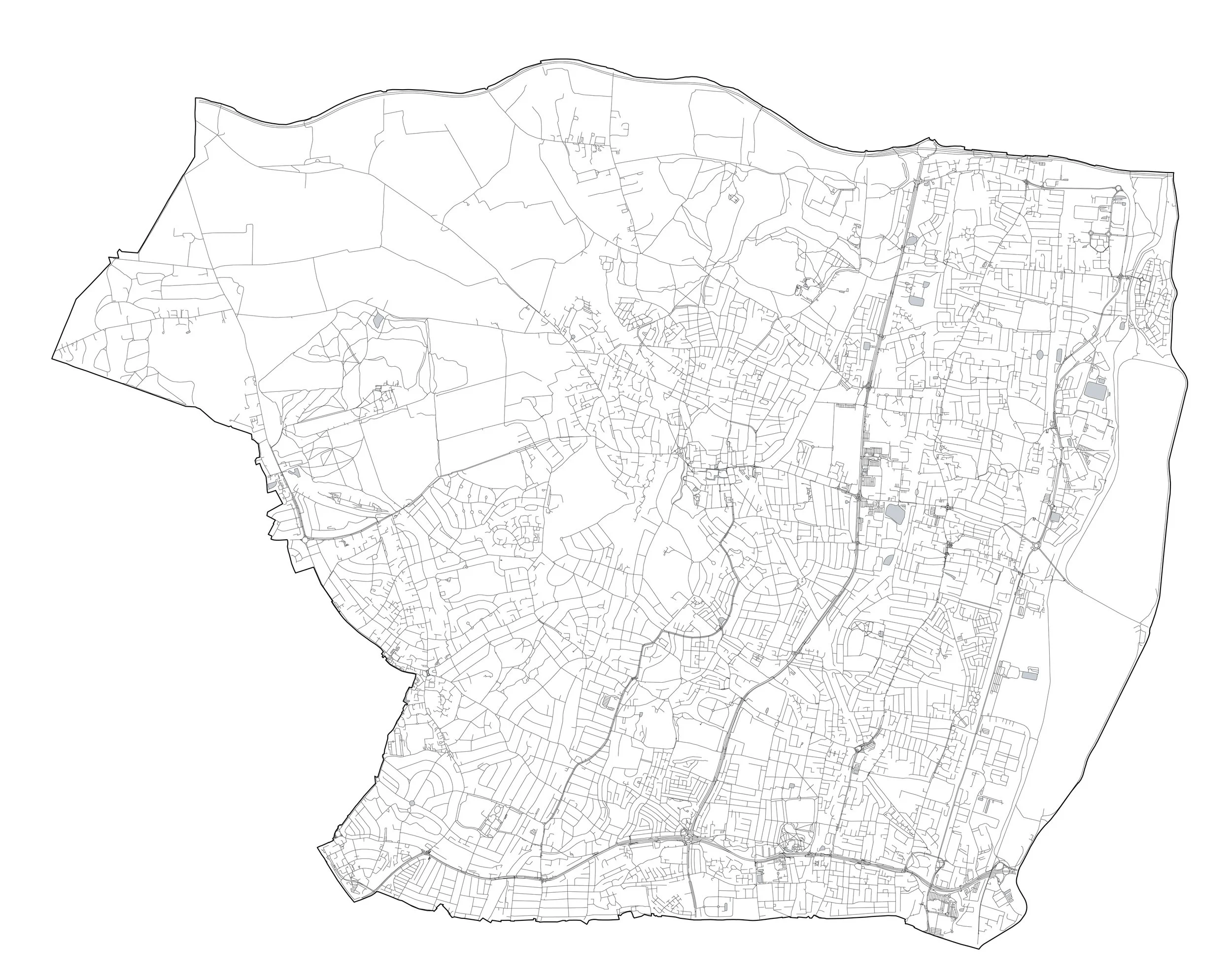
Map of the London Borough of Enfield
Based on a comparison between the existing planning framework (primarily the Core Strategy 2010, Development Management Document 2014, and various Area Action Plans) and the Draft New Enfield Local Plan (Regulation 19, 2024), there is a distinct shift in Enfield’s approach to development.
The current framework focuses on regeneration within specific urban corridors while strictly protecting the Green Belt. The Draft New Local Plan proposes a fundamental pivot toward significantly higher growth targets, necessitating the release of Green Belt land and the intensification of industrial and urban sites.
Here are the key areas of change:
1. Housing Targets and Scale of Growth
Existing Approach: The 2010 Core Strategy planned for approximately 11,000 new homes over a 15-20 year period (roughly 560 to 798 per year), concentrated on "previously developed land" in the south and east of the borough.
New Local Plan Approach: The new plan is driven by the London Plan (2021) targets, which drastically increased Enfield’s housing requirement to 1,876 homes per annum. The Draft Plan aims to deliver approximately 25,000 homes over the plan period (up to 2039).
What is Changing: The scale of delivery has more than doubled. The "regeneration-only" approach of the 2010 Core Strategy is no longer sufficient to meet these imposed targets, forcing the Council to look beyond brownfield sites.
2. Spatial Strategy and Green Belt
Existing Approach: The existing Core Policy 33 explicitly states the Council will "protect and enhance Enfield’s green belt", maintaining a target of "no net loss of green belt". Growth is strictly focused on the "Strategic Growth Areas" of Central Leeside, North East Enfield, Enfield Town, and the North Circular, avoiding the rural west.
New Local Plan Approach: The Draft Plan proposes a "Main Modifications" approach that includes the allocation of Green Belt land for development. This includes the "Chase Park" (Vicarage Farm) and "Crews Hill" allocations.
What is Changing: This is the most controversial shift. The Council is moving from absolute preservation of the Green Belt to a strategy of "Green Belt release" to create new rural placemaking areas (essentially new neighbourhoods on former Green Belt land) to meet housing and logistics needs that cannot be met within the urban envelope.
3. Industrial Land and Logistics
Existing Approach: The Core Strategy and DMD strongly protect "Strategic Industrial Locations" (SIL) and "Locally Significant Industrial Sites" (LSIS),. The policy generally resists the loss of industrial capacity. The Edmonton Leeside AAP (2020) reinforces safeguarding these estates for employment use.
New Local Plan Approach: While still protecting industrial capacity, the Draft Plan embraces "industrial intensification" and "co-location." This aligns with the London Plan (2021) Policy E7, which encourages intensifying industrial land to deliver additional capacity and potentially co-locate residential uses,.
What is Changing: A move away from single-use industrial zoning toward multi-storey logistics and mixed-use developments where industrial workspaces sit alongside or beneath residential units ("beds on sheds"), particularly in the Meridian Water and Edmonton Leeside areas.
4. Meridian Water Intensification
Existing Approach: The Core Strategy (2010) envisaged "up to 5,000" homes at Meridian Water. The more recent Edmonton Leeside AAP (2020) maintained this figure of 5,000 homes and 1,500 jobs.
New Local Plan Approach: The Draft Plan significantly increases the density and target for Meridian Water, aiming for closer to 10,000 homes.
What is Changing: The area is transitioning from a "regeneration opportunity" to the borough’s primary engine for housing delivery. This will require significantly higher densities and taller buildings than originally envisaged in the 2010/2014 documents.
5. Tall Buildings
Existing Approach: The DMD Policy 43 takes a cautious approach, stating tall buildings are "not acceptable" in inappropriate areas and listing specific criteria for exceptions. The North Circular AAP identifies specific nodes (like Ladderswood) for taller buildings but emphasises responding to suburban character.
New Local Plan Approach: The Draft Plan includes a more permissive and explicit Tall Buildings policy, designating specific zones (Town Centres, Meridian Water, and transport hubs) where height is actively encouraged to optimize site capacity, aligning with London Plan Policy D9.
What is Changing: A shift from treating tall buildings as exceptions to be managed, to treating them as a necessary tool for optimization in specific high-accessibility zones.
6. Town Centres (Enfield Town)
Existing Approach: The Enfield Town Masterplan SPD (2018) focuses heavily on preserving the "historic market town identity". It promotes modest growth and retains the conservation area's character.
New Local Plan Approach: While heritage remains important, the Draft Plan promotes higher density residential development within town centres to combat retail decline and meet housing needs.
What is Changing: A transition from "retail-led" town centres to "housing and experience-led" centers. The Draft Plan acknowledges that to save the high street, significant residential population density must be introduced directly into the town centre.
The new Enfield Local Plan has not yet formally come into effect. The Council is currently preparing this new Local Plan to cover the period up to 2039, which will eventually supersede the existing Core Strategy and Development Management Document.
As outlined in recent council guidance, the draft plan currently holds little to no weight in decision-making, though this will increase as it moves closer to formal adoption. As the plan navigates the necessary approval stages with the Secretary of State, we will keep you updated in due course on its progress. Further updates are expected in March 2026.
